
Call for Papers
Call for Papers: Idea Journal 2026 — Interior Futures
***The deadline for submissions has now passed.***
Download the full Call for Papers here.
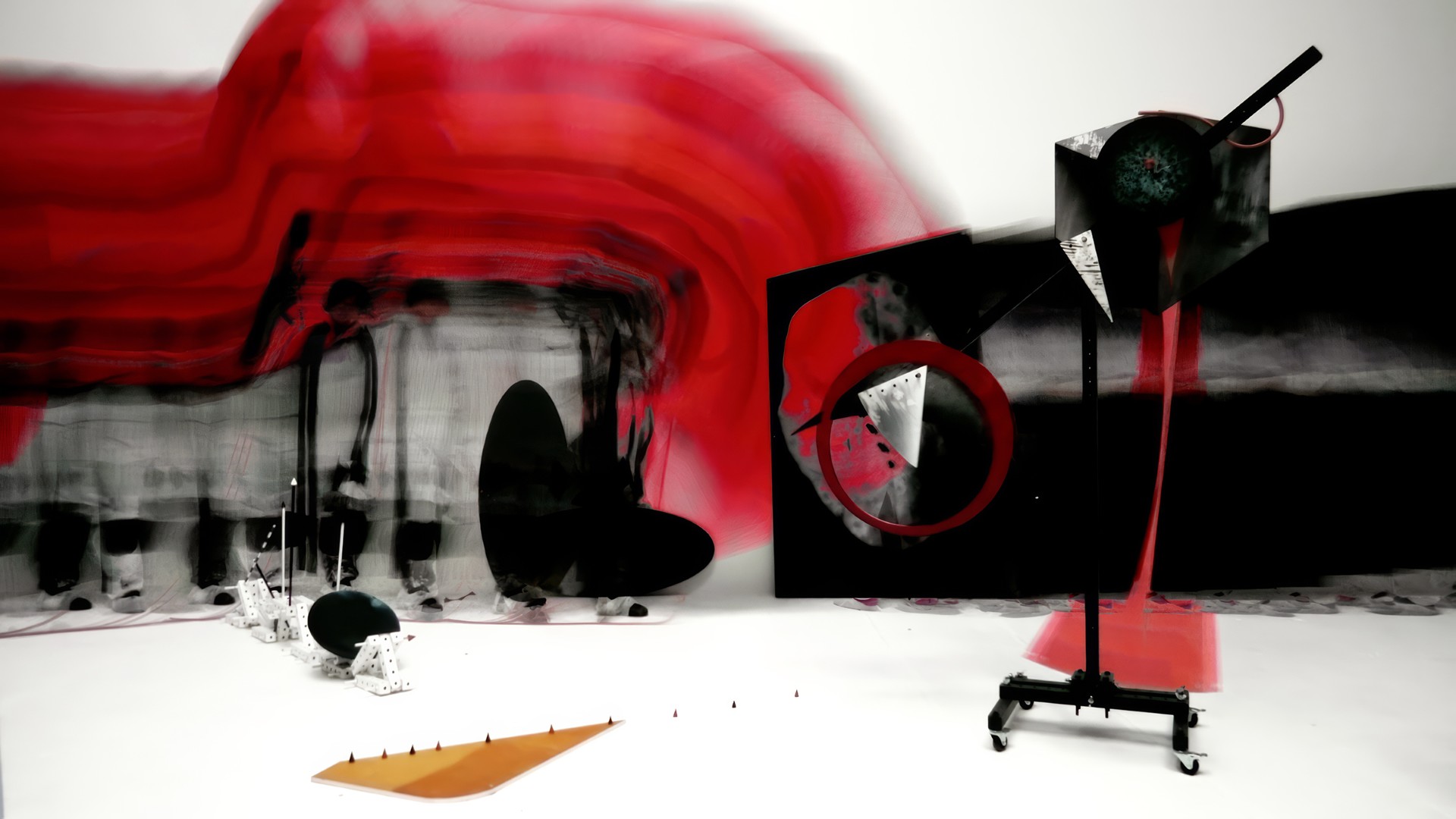 Jason Maling, Diagrammatica, live session film still, 2024. Edition prints available here.
How do we make sense of where we are and where we are going? Classical approaches to conceiving interior environments have depended on ideas of causality between the image of an interior and its future realisation, a causality that implies spatial design is somehow inextricably linked to social betterment.
Despite its best intentions, the lingering influence of this idea of futuring creates a series of problems in our methods of spatial design. It suggests, on the one hand, that planning predicts behaviour, which historically has been an avenue through which political ethics have attempted to shape personal morality and action. This history has too often resolved in oppressive spatial typologies, beginning with Jeremy Bentham’s Panopticon prison plan. On the other extreme, by focusing on the power of the image itself, it suggests that the composition of interior spaces in drawings, the very geometry and aesthetics of an image, can somehow introduce aspirational ideals into spatial design. An approach that leads to utopian romanticism in planning and equally impossible expectations of future human action, constituting a different but no less oppressive form of mental constraint.
These limits on how we conceive future spaces concentrate the heavy responsibility of ‘where we are going’ in the hands of spatial designers, star architects, and interior specialists. In doing so, they constrain the wondrous possibilities of social cohesion to the expectations of a select few. And yet, even a brief review of the shifting relationships between spatial planning and occupancy over time reveals the inescapable failure of moral and idealised design concepts to predict the resultant value of inhabited interior spaces.
Moreover, when we examine examples that refute frameworks of planning altogether, we open design processes to new and unprecedented paradigms that privilege a plurality of voices, foreground environmental inputs, and recognise our actual limits when introducing indeterminacy, chance, and change into how we conceive, design, execute, and experience interior spaces.
The 2026 issue of Idea Journal seeks contributions that critically examine concepts of interior futures. In the history of spatial design, what examples illustrate the limits of future planning in reflecting the diversity of both human and non-human inhabitants who come to occupy interior spaces and make them their own? What alternative modes of designing exist that de-author the designer, privilege co-creation, and welcome unprecedented forms of difference in how we conceive and make interior spaces? What other methods of futuring accept uncertainty, engage complexity, and look beyond the limits of proposing future betterment through prediction and strategic foresight? What alternative ways of using interior images and drawings go beyond envisaging imaginaries that inadvertently intend to determine and control?
This line of enquiry raises several uncomfortable questions central to the role of the spatial designer. Namely, what is the purpose of our built environment if those who design it cannot genuinely claim to know whether their work will result in social betterment? Despite this, in a landscape of rapidly accelerating social and environmental change, facing such questions contributes timely discourse on how diversity and inclusion may supplant prediction and oppression. They offer us new means to remain agile and engaged with whatever unexpected futures may come.
Contributions may take the form of text-based research essays that offer new insights into the history, theory, and practice of interior futures, examined through examples of interior projects or their images. Contributions may also take the form of image-based research essays that respond to, comment on, and reflect ideas of interior futures. Using the space of the page as a site of creative exploration, image-based research essays should be conceived as original works that engage with the themes of this issue, rather than as visual documentation of projects produced elsewhere.
Download the full Call for Papers here.
***The deadline for submissions has now passed.***